

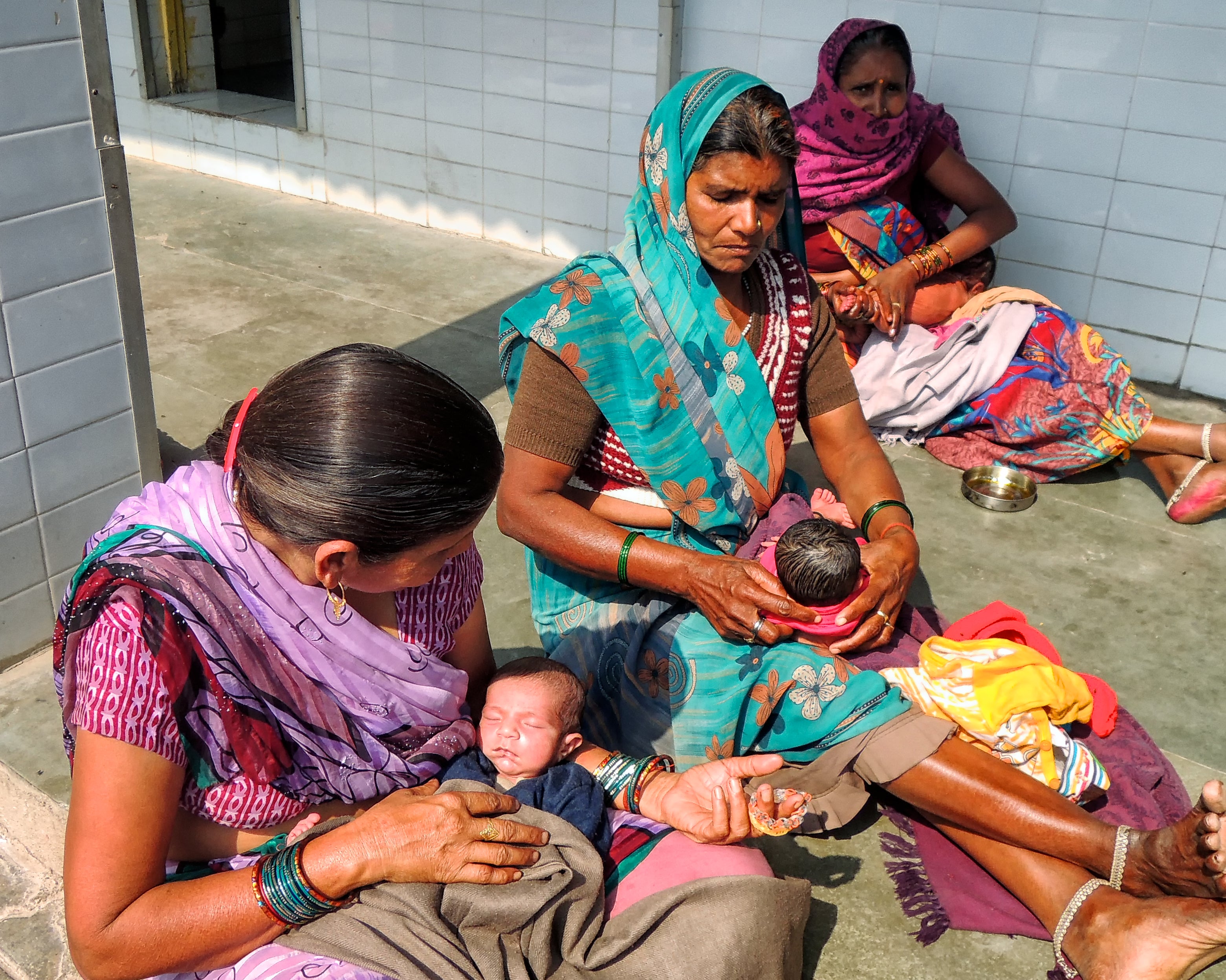
Improving outcomes for small vulnerable newborns around the world requires solutions to address gaps across the entire ecosystem of care. The BetterBirth Program is designing solutions to promote earlier, more, and better breast milk feeding and help small vulnerable newborns survive and thrive.
INTERVENTIONS TO IMPROVE FEEDING & GROWTH OUTCOMES
LIFT-UP: Low Birthweight and Preterm Infant Feeding Trial and Supportive Care Package
LIFT-UP is a group of studies investigating ways to improve feeding for small vulnerable newborns in low-resource settings. These infants — born preterm, low birthweight, or small for their gestational age — account for 55.3% of global neonatal deaths. Although there are concrete steps clinicians, mothers, and families can take to care for these infants, these interventions don’t reach everyone who should benefit.
LIFT-UP includes two main components:
- Evaluating implementation of a comprehensive support and counseling package to improve practices in lactation, breast milk feeding, Kangaroo Mother Care, and safe hygiene (India, Tanzania, Malawi)
- Exploring the impact of using human milk fortifier to improve infant growth and health outcomes (in India only)
In addition to building the evidence base for solutions to help these newborns, LIFT-UP is creating a global good. The Feeding Support Package Plus (FSP+) was co-designed with the ultimate users of the tools — clinicians and community providers, mothers and families — and is being evaluated with implementation science to ensure it is practical to use in the real world. The FSP+ will be freely available when the study concludes so people around the world can download it, use it, and adapt it to their settings.
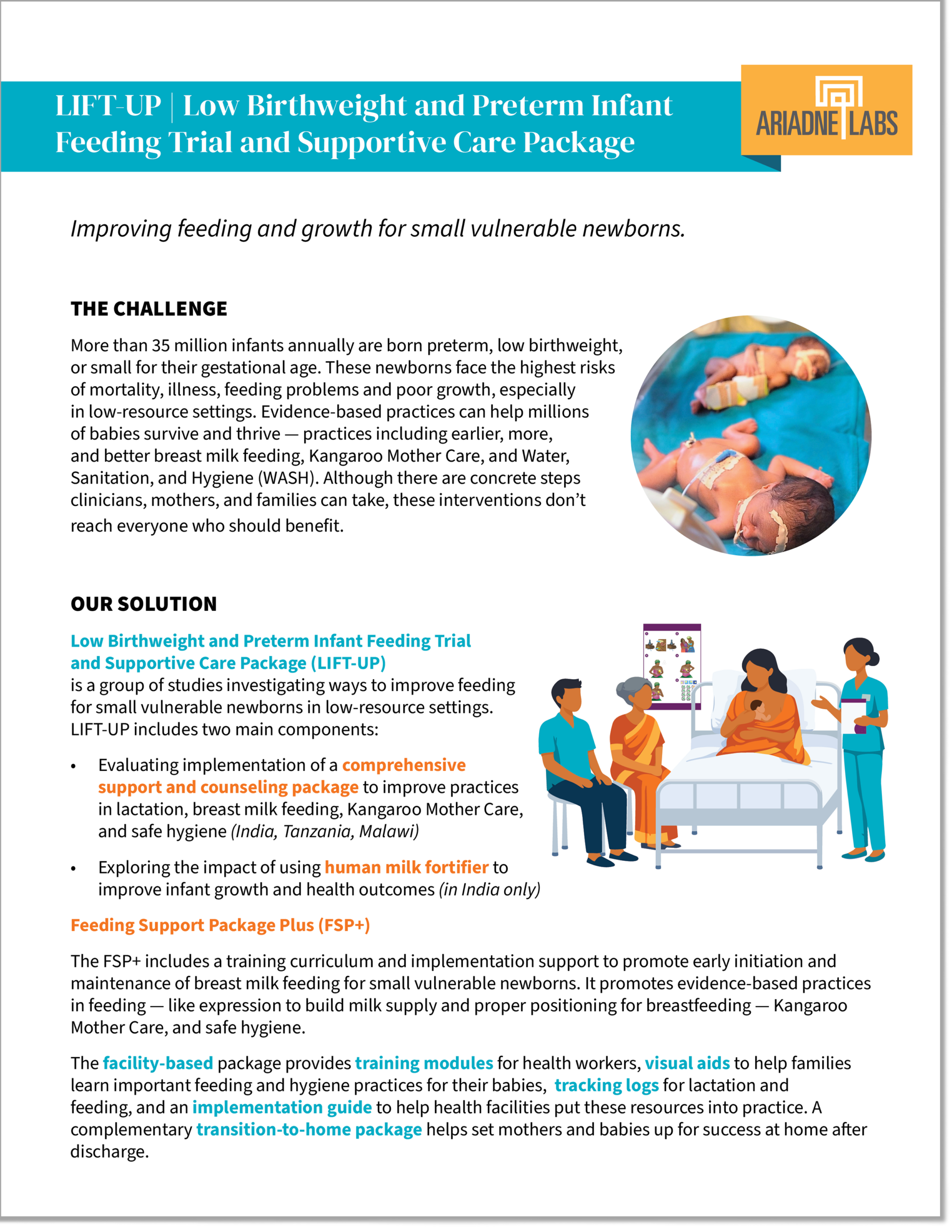
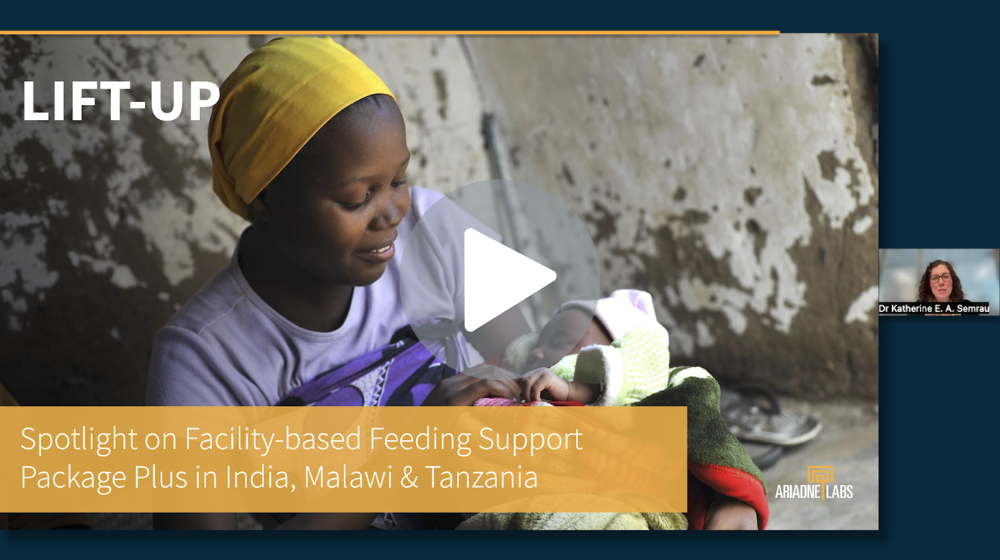
NEW RESOURCE:
OVERVIEW: Low Birthweight and Preterm Infant Feeding Trial and Supportive Care Package (LIFT-UP) Study
BUILDING THE EVIDENCE BASE AND IDENTIFYING AT-RISK INFANTS
LIFE: Low Birthweight Infant Feeding Exploration
Launched in 2019, Ariadne Labs’ Low Birthweight Infant Feeding Exploration (LIFE) study documents current feeding practices, growth patterns, child development, and other health outcomes among more than 1,100 low birthweight infants in low- and middle-income countries. The study aims to identify which infants are at highest risk, determine effective interventions, highlight remaining evidence gaps for future research, and contribute to global guidelines with evidence-based action steps.
Globally, 20.5 million infants are born with low birthweight each year. These infants account for more than 80% of newborn deaths, with 1.9 million dying annually, and are 20 times more likely to die than normal birthweight infants. They are also at increased risk for illness, growth deficits, and developmental delays. Low- and middle-income countries bear the greatest burden of low birthweight births and neonatal deaths.
In recent years, there has been an increased global focus on low birthweight infants. In 2015, the United Nations identified ending preventable deaths of newborns and children by 2030 as a Sustainable Development Goal, and in 2020, the WHO published standards for improving the quality of care for small and sick newborns in health facilities.
To make progress toward these goals, researchers, policymakers, clinicians, and funders need an enhanced evidence base to strengthen existing global feeding guidelines and identify priority areas for further research. The LIFE study is filling this evidence gap to help ensure that low birthweight infants have the chance to survive and thrive.
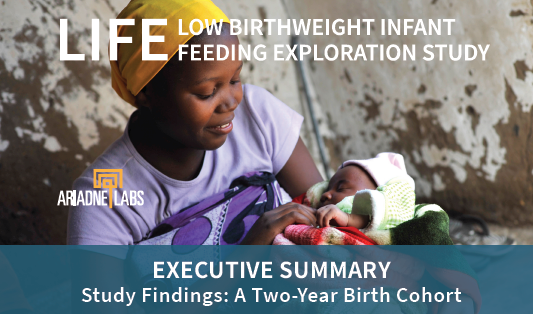
A recently published Executive Summary details study findings for infants from birth to one year. The summary outlines key actions for an evidence-based approach to improve growth, survival, and development outcomes for these infants, with a focus on early identification of the highest risk infants to allow for early intervention.
FEATURED RESOURCE:
LIFE: Low Birthweight Infant Feeding Exploration Study Findings: A Two-Year Birth Cohort
Key Findings
- Specific characteristics make some infants more vulnerable than others to illness, slow growth, and death. These outcomes can be avoided with focused interventions at key timepoints.
- Growth monitoring soon after birth allows for early identification of risk and proactive intervention to prevent poor growth and developmental outcomes in later infancy.
- Assessment tools designed specifically for low birthweight infants in resource limited settings are needed to facilitate clinical decision-making and allocation of scarce resources.
LIFE Study Publications
Consortium Partners
Study Partners and Principal Investigators
- Community Empowerment Lab, India
- Jawaharlal Nehru Medical College, Belgaum, India
- Srirama Chandra Bhanja Medical College and Hospital, Cuttack, India
- JJM Medical College, Davangere, India
- SS Institute of Medical Sciences, Davangere, India
- University of North Carolina-Project Malawi, Lilongwe, Malawi
- Muhimbili University of Health and Allied Sciences, Dar es Salaam, Tanzania
Additional Subject Matter Partners
- Emory University, Atlanta, GA
- Brigham and Women’s Hospital, Boston, MA
- Boston Children’s Hospital, Boston, MA
- Harvard T.H. Chan School of Public Health, Boston, MA
- Harvard Medical School, Boston, MA
- The Warren Alpert Medical School of Brown University, Providence, RI
- PATH, Seattle, WA
- University of North Carolina at Chapel Hill, Chapel Hill, NC