


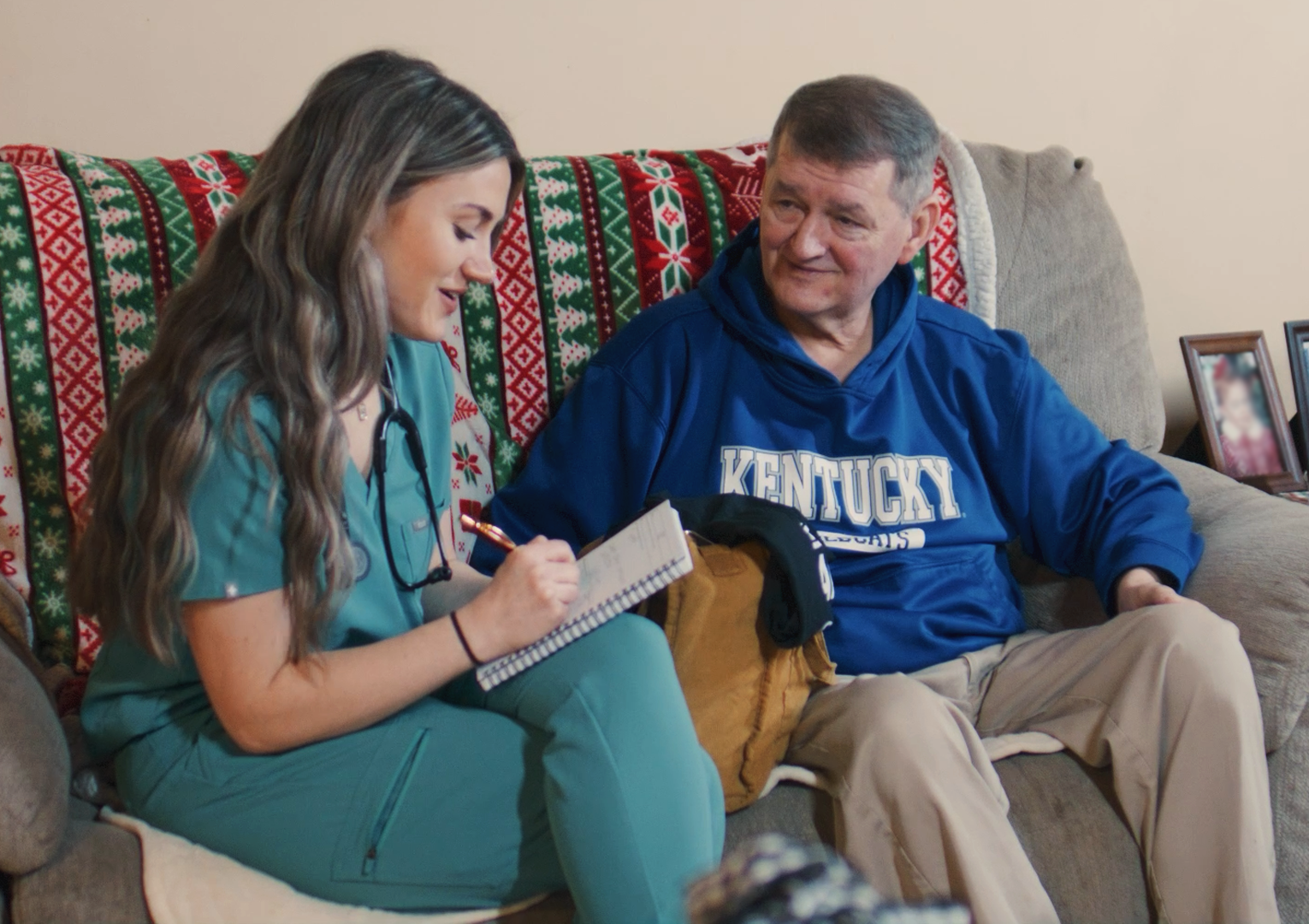
After a surgery in 2022, Carl developed an infection. He was told treatment would require a 10-day hospital stay, and he was dreading the long days of beeping machines, interrupted sleep, and mediocre food.
So when he learned that he qualified for the hospital’s newly launched Rural Home Hospital Program, he was thrilled. Carl could return home and receive the same care, allowing him to recover where he felt most comfortable. Carl’s nurse visited him twice a day, he was monitored 24/7, and he met with his doctor through video calls. For Carl, it was a great experience. “You get all the rest you need, you don’t have to go to the hospital and sit around. It’s just more comfortable for the patient,” he said.
A recent randomized controlled trial led by Ariadne Labs showed that for patients like Carl, Rural Home Hospital programs can deliver acute care at an equal or lower cost compared to brick-and-mortar hospitals, while providing a better patient experience.
A First-of-its-Kind Trial
The Rural Home Hospital program at Appalachian Regional Healthcare in Hazard, KY had been launched as part of Ariadne Labs’ first-of-its-kind randomized controlled trial of a rural home hospital model. Carl was just one of 161 patients enrolled in the trial, which also had sites at Blessing Health System in Quincy, Illinois and Wetaskiwin Community Health Centre in Wetaskiwin, Alberta, Canada. Researchers at Ariadne Labs wanted to learn more about the effect of rural home hospital care on cost, 30-day hospital readmission rate, physical activity, and patient experience compared to care in a brick-and-mortar facility.
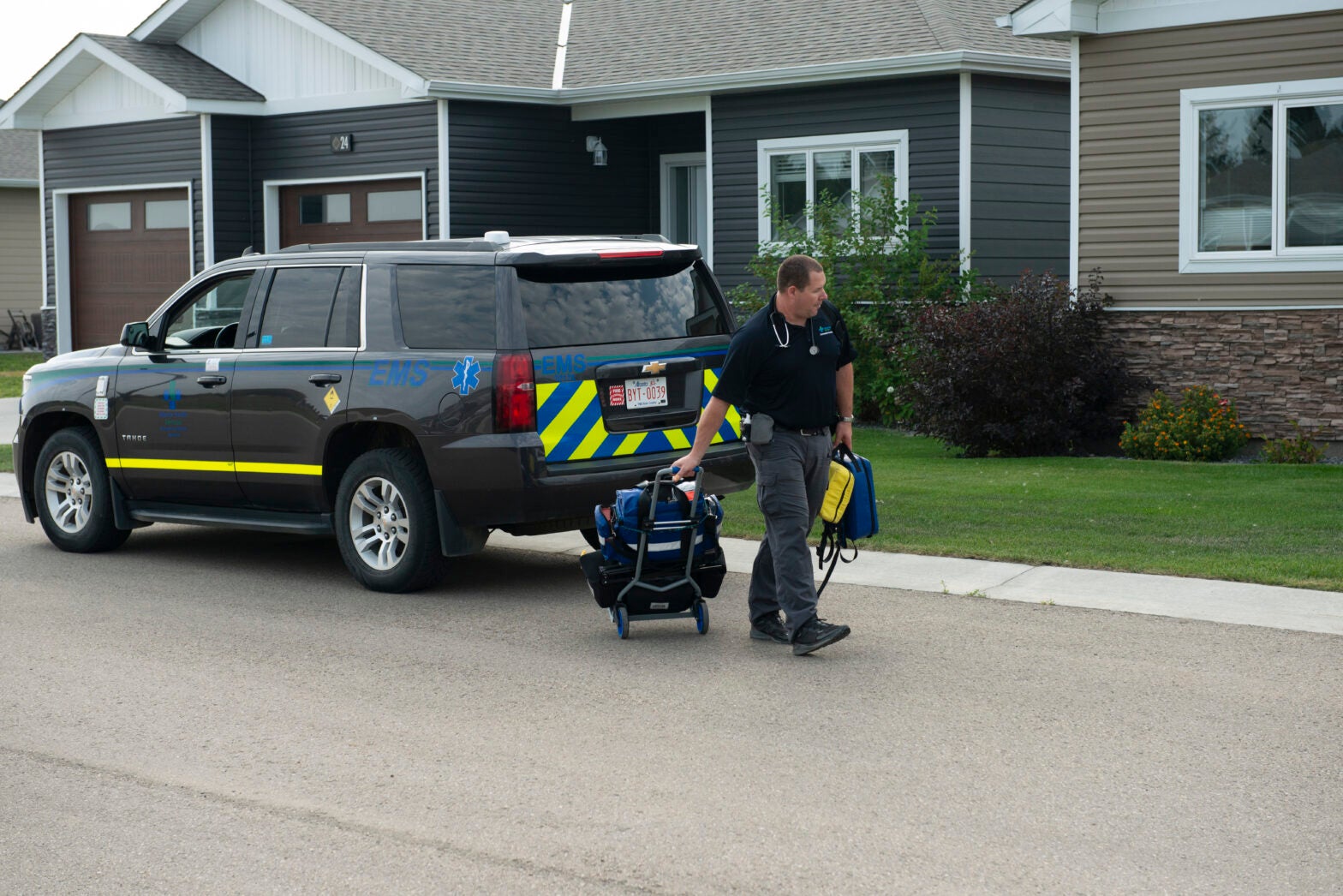
Through their hospital’s Home Hospital program, patients were screened for eligibility, then randomly assigned to either return home for care, or remain in the brick-and-mortar hospital. Like Carl, patients at home had twice daily visits from a specially-trained clinician, who used portable, internet-connected diagnostic tools to take vital signs and perform diagnostic tests. Test results were sent to a physician at the hospital in real-time, and the doctor could guide a physical exam and discuss diagnosis, treatment, and follow-up care with patients via video technology.
Does Rural Home Hospital Work?
Results of the trial were published in JAMA Network Open in December of 2025. Findings showed that compared to brick-and-mortar hospitals, rural home hospital programs can deliver acute care at an equal or lower cost with a better patient experience. The trial showed that rural home hospital programs are not just feasible to implement, but are actually preferred by patients — 88% would recommend a rural home hospital program to friends and family compared to 45% for brick-and-mortar care — and have added benefits for physical activity.
Investigators also noted that while the results didn’t show a meaningful reduction in cost overall, prompt transfer home did appear to be linked with cost reduction. “The results really showed the importance of getting patients back home as soon as possible,” said David Levine, MD, Director of the Home Hospital program at Ariadne Labs and the trial’s lead investigator. “Many patients in the trial spent four or five days in the hospital — most of the length of their care — before going home. But when we look only at patients who were transferred home in less than three days, there was a cost reduction of up to 27%. So, under the right conditions, we do see an opportunity for rural home hospital care to be not only better for patients, but also cost-saving.”
Solving a Rural Health Care Crisis
The results are good news for rural health care. One in five Americans live in rural areas, yet nearly 80% of these areas are medically underserved. Rural hospital closures in recent years have only exacerbated the issue, straining capacity even further and forcing people to travel increasingly long distances for hospital-level care. Canada faces similar problems, as noted by Conrad Taylor, a Community Paramedic with the Alberta Health System who visited Pat for her care. “We’re in a situation in our health system [where] we definitely feel a strain….our hospitals are extremely busy. So to be able to provide hospital-level care outside of the walls of a hospital I think is a huge component for health care and for our patients and for our families.”
Ariadne Labs has been working since 2018 to bring new pathways to care to these remote parts of the country. “We’re very pleased with the success of this trial and hope it can spur further action to bring home hospital programs to rural areas,” said Dr. Levine. “The care that someone can receive shouldn’t be dictated by where they live. Rural home hospital offers a new opportunity to make acute care accessible to all.”
Looking ahead, the team plans to partner with teams around the country to expand rural home hospital programs, with the goal of making this model the default option for rural Americans in need of hospital care.