

What would it take to bring hospital-level care directly to rural communities—wherever it is needed?
That question is at the center of the Advanced Research Projects Agency for Health’s (ARPA-H) PARADIGM program, a national effort to develop scalable mobile medical units that can deliver advanced clinical care beyond the walls of a traditional hospital. In June, Ariadne Labs’ Home Hospital Program helped put one of these “hospitals on wheels” to the test. These mobile medical units will function as clinical hubs to deliver cancer care to rural patients and expand the catchment area of clinical partner Atrium Health’s home hospital program in rural North Carolina.
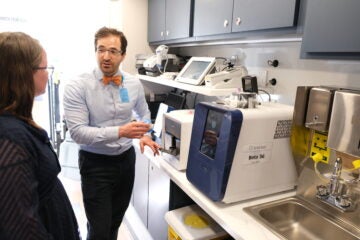
“Home hospital care has the potential to make high-quality, acute care more accessible to people who live far from a hospital or face barriers to reaching one,” said David Levine, MD, MPH, MA, Director of Ariadne Labs’ Home Hospital Program and Clinical Director of Research and Development at Mass General Brigham Healthcare at Home. “These simulations help ensure that the mobile medical units are not only technically sophisticated, but designed around the needs of the patients and care teams they are meant to serve.”
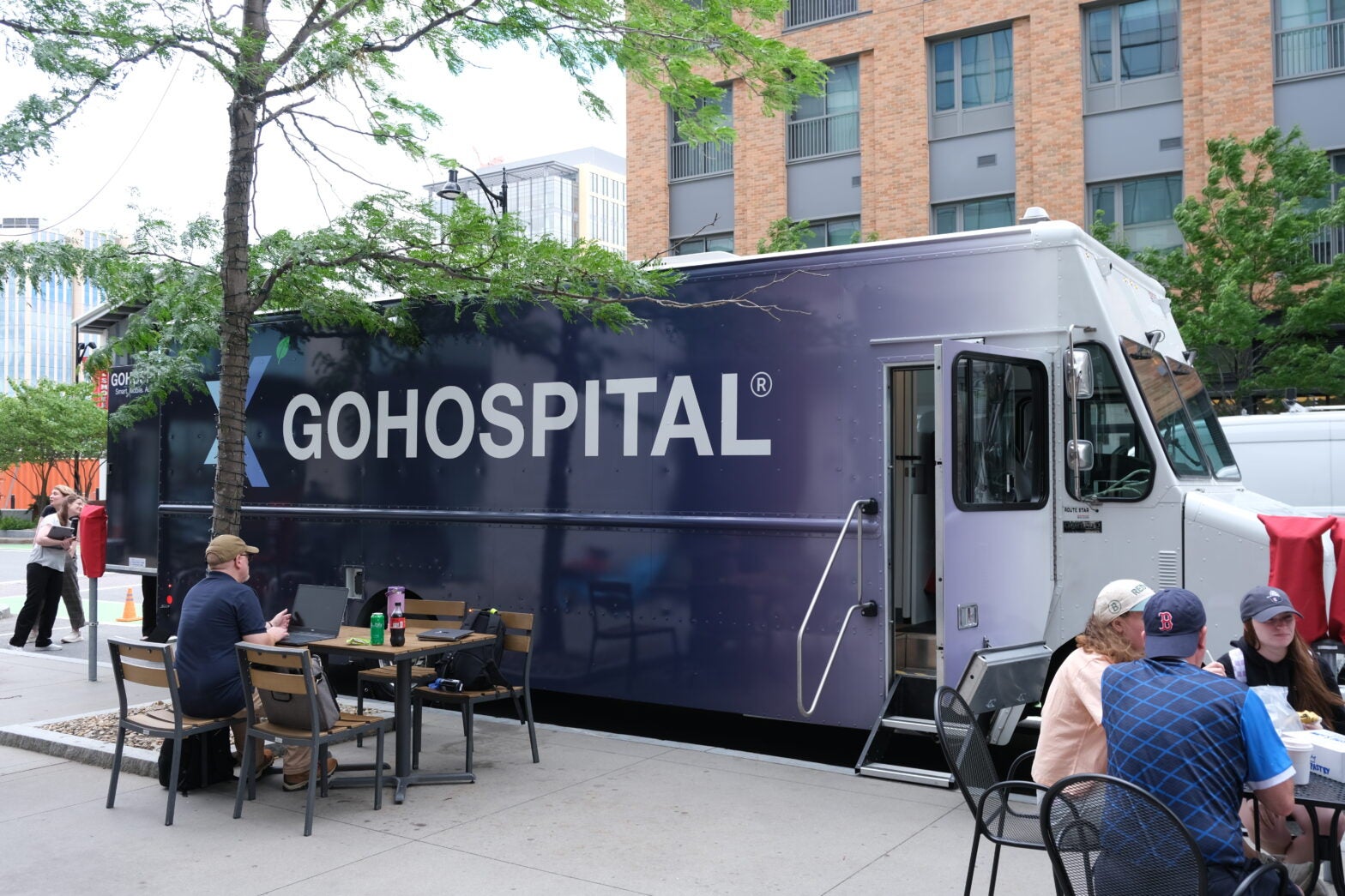
In mid-June, Ariadne Labs welcomed a glimpse of the future of hospital care to its Assembly Row offices in Somerville, MA: a prototype mobile medical unit designed to bring hospital-level services directly to rural communities. Dr. Levine led a guided tour of the unit and demonstrated how it could operate when deployed in the field.
The event also highlighted complementary innovations underway across Mass General Brigham under the PARADIGM program. Raj Gupta, MD, PhD, Vice Chair of Clinical Operations in the Department of Radiology at Massachusetts General Hospital, showcased a fifth-generation mobile CT scanner. Julian M. Goldman, MD, Director of the Medical Device Interoperability and Cybersecurity Program at Massachusetts General Hospital, demonstrated advances in device interoperability and cybersecurity—critical capabilities for delivering safe, coordinated care in a mobile setting.
The PARADIGM program reflects ARPA-H’s approach to tackling urgent health challenges: pursuing ambitious, high-risk and high-reward solutions with aggressive milestones.
In just 18 months, the PARADIGM performer teams designed and built advanced MMU prototypes. Independent evaluators, including MIT Lincoln Laboratory, are helping assess progress and identify the approaches with the greatest potential to succeed.
ARPA-H has shared that they are now working to move these mobile hospitals into the field to treat real patients. For Ariadne Labs’ Home Hospital Program, the work represents an important step toward a future in which high-quality hospital care can travel to patients—helping close gaps in access for communities facing the greatest need.
The rural health crisis demands innovative solutions. With funding from ARPA-H’s PARADIGM, Ariadne Labs and its collaborators are helping ensure those solutions are built with—and for—the people they are intended to serve.
This research was, in part, funded by the Advanced Research Projects Agency for Health (ARPA-H). The views and conclusions contained in this document are those of the authors and should not be interpreted as representing the official policies, either expressed or implied, of the United States Government.