


Type 1 diabetes (T1D) can often be identified before symptoms through blood tests that detect diabetes-related autoantibodies. Early identification can reduce diabetic ketoacidosis at diagnosis, improve long-term outcomes, and give children, families, and care teams more time to prepare for the transition to T1D care.
Currently, screening is largely limited to children at high risk of developing T1D, usually those children who have a close relative with the disease. Yet, up to 90% of children who develop T1D do not have a close relative with the disease, so most are unlikely to be screened. Reaching these children will require integrating screening into routine pediatric care and screening every child, every time, everywhere in the U.S. Achieving that goal will require more than isolated programs or local innovation; it will require a coordinated field-building strategy.
Scaling T1D screening to the whole U.S. pediatric population will require advances in many areas of work:
- Awareness and Education
- Clinical Preparation
- Research
- Policy
- Health Information Technology
- Autoantibody Assay Development
Progress in any one of these areas will likely improve our ability to scale T1D screening, but reaching every child will require a coordinated effort across all of these areas of work, building on each other’s successes to push the field forward.
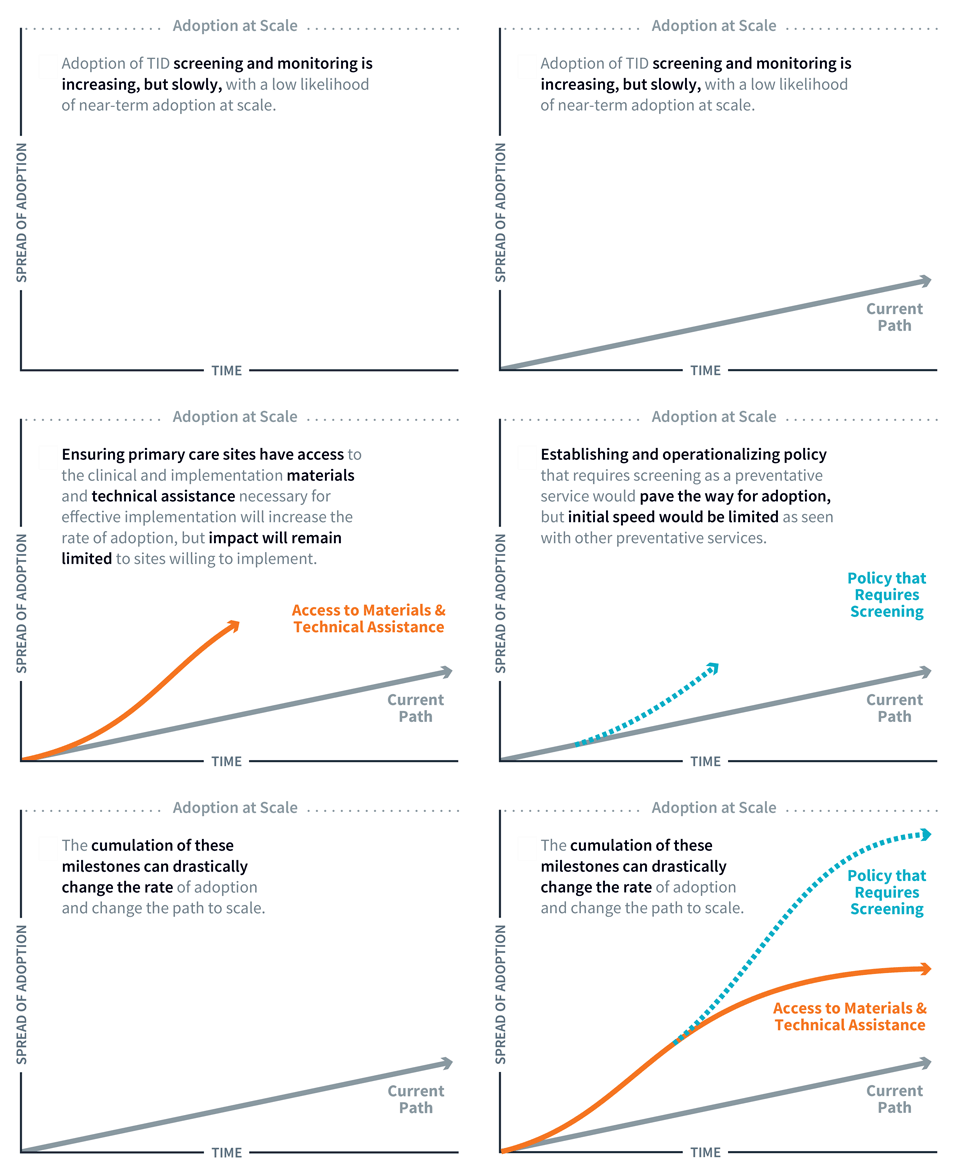
Establishing system supports for implementation of T1D screening (Clinical Preparation) will increase ease of adoption but only in sites that are able to find and access those supports. Similarly, requiring payers to cover screening by securing a recommendation from the U.S. Preventive Services Taskforce (USPSTF) would encourage pediatric practices to implement screening, but as we have seen with other preventive recommendations such as lead screening, the scale at which screening occurs may remain limited. If both system supports and policy supports are in place along with other advances, T1D screening will reach many more children more quickly.
Advancing all these areas of work will require all T1D stakeholders to play a role in pushing the field forward. We have identified key next steps for all stakeholders below.
Identifying and fulfilling these next steps is an important goal for the field, but it is equally important that various stakeholders coordinate their efforts for maximum impact.
Coordination among stakeholders in the T1D field will ensure that discrete advances come together in a way that facilitates T1D screening at a nationwide scale. For example, BreakthroughT1D submitted an application for general-population T1D screening to USPSTF in May 2025. They shared the application and letter of support publicly to encourage others to submit their own applications, building a group of interested stakeholders to both publicize the progress of the policy work and to seek input and advice for pushing it forward. The U.S. Coalition for Early T1D Action is another example of stakeholders coming together to push forward the field as a whole. Perhaps most importantly, funders must support both the work of various stakeholders and coordination functions (such as coalitions or collaborations) to ensure the field is working in tandem.
This spread strategy offers a first step in coordinating the field of T1D screening toward general-population screening at national scale. Stakeholders should utilize and adapt this strategy to scale T1D screening to reach every child, every time, everywhere in the U.S.